Tree Removal in Tiny, Ontario

Tiny Township Tree Removal

Careful planning, controlled removal, and a clear work area for hazardous, damaged, or unwanted trees on your property.

✓Property and tree assessment
✓Controlled removal planning
✓Agreed debris handling
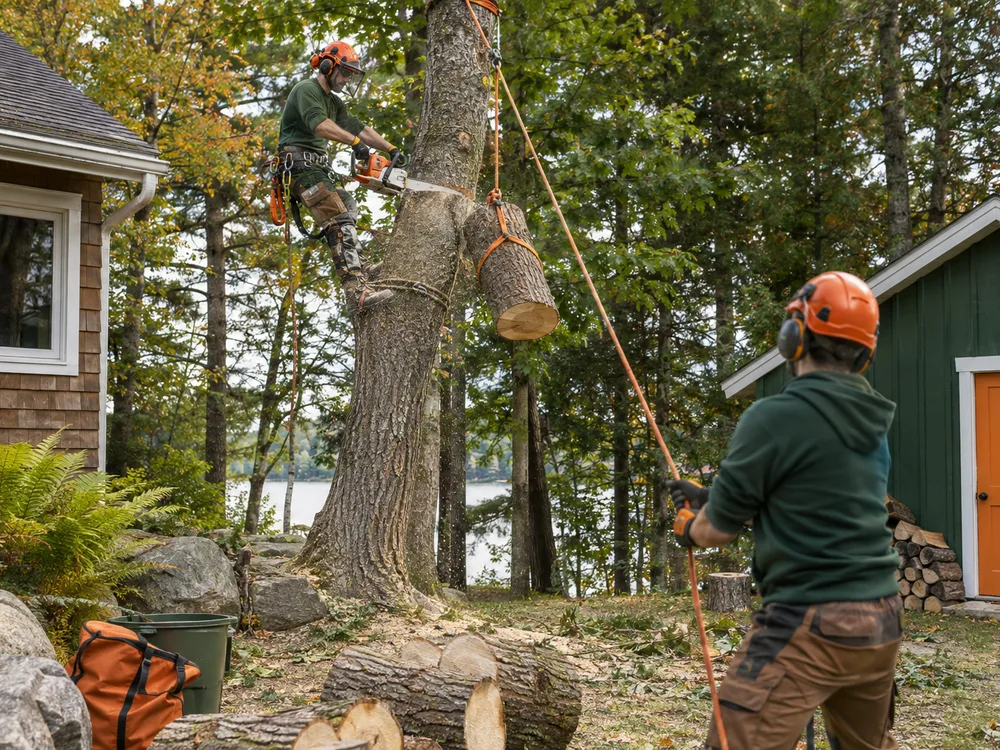
A trained tree removal crew using ropes to lower a cut tree section in a spacious residential yard in Tiny Township, Ontario
Removal Planning

Safe Tree Removal Starts With the Right Plan

Tiny Township tree removal requires more than cutting at the base and hoping a tree falls in the right direction. Nearby homes, garages, wells, septic components, overhead conductors, fences, gardens, and neighbouring property can all limit the available drop zone. Before work starts, the tree and its surroundings should be assessed so the removal method matches the actual risks.

Tiny Tree Service handles trees that are dead, storm-damaged, structurally compromised, poorly located, or standing in the way of planned property work. As Tiny's tree service specialists, we examine the trunk, crown, visible root area, lean, access, and nearby targets before deciding whether a tree can be felled whole or must be dismantled in controlled pieces.

That preparation matters throughout Tiny's mix of wooded residential lots, shoreline properties, rural acreages, and seasonal homes. Limited access near Georgian Bay may rule out large equipment, while a more open inland property may provide room for directional felling. The goal remains the same: remove the tree without taking avoidable chances with people or property.
Book Your Free Inspection

When Tree Removal Is the Practical Choice

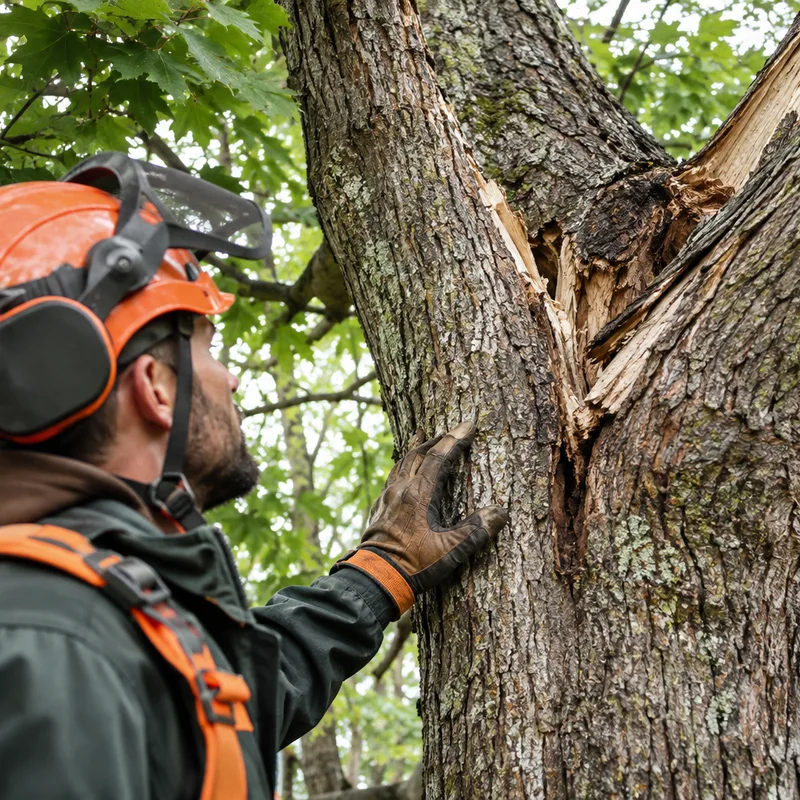
A split tree union with visible storm damage being inspected from ground level before removal
Visible defects and the targets beneath a tree both affect the removal plan.

Removal is often appropriate when a tree is dead, has suffered major trunk failure, has severe root damage, or cannot be retained safely in its location. A pronounced new lean, soil lifting near the root plate, cracks between major stems, hanging limbs, cavities, and fungal growth near the base can justify prompt assessment. One symptom alone does not always settle the decision, but several defects together may indicate that the tree has lost dependable structural support.

Location also affects the decision. A declining tree over a roof, driveway, play area, or frequently used entrance has a different risk profile than the same tree in an unused woodlot. Trees interfering with construction may also need removal after property boundaries, utility clearances, and any municipal requirements have been checked.

After heavy wind, freezing rain, or wet snow, keep people and vehicles away from damaged trees. Do not approach a limb resting on a utility conductor. Treat every wire as energized and contact the utility responsible for the line before arranging work within the electrical hazard area.

Book Your Free Inspection
Local Property Conditions

Tree Removal in Tiny, Ontario for Different Property Conditions

Shoreline and Seasonal Properties

Properties near Balm Beach and Woodland Beach can have cottages, mature trees, outbuildings, and narrow access routes close together. When equipment cannot reach the trunk, rigging may be used to lower sections into a controlled landing area.

Wooded Residential Lots

In communities such as Wyevale and Perkinsfield, nearby trees may restrict the direction of fall. The crew must account for neighbouring crowns, fences, sheds, driveways, and the space needed to process debris.

Rural Acreages

Open space can make directional felling possible, but the work still requires an adequate escape path, sound hinge wood, and a clear drop zone. Hidden wire fencing, uneven ground, and soft access routes must be identified first.

Storm-Damaged Trees

Broken tops, suspended branches, split stems, and partially uprooted trees can shift without warning. These conditions often require controlled cuts and rigging rather than ordinary ground felling.

Trees Near Structures

A tree beside a house or garage is usually dismantled in smaller sections. Ropes, friction devices, and suitable anchor points help control each piece and reduce impact on the work area.

Unwanted or Poorly Placed Trees

A sound tree may still be unsuitable because it crowds a structure, conflicts with approved work, or has outgrown the available space. The surrounding property determines how it can be removed.

Assessment to Final Check

Our Tiny Township Tree Removal Process

  1. Step01

    Property and Tree Assessment

    The first step is to identify the tree, its condition, access constraints, potential drop zone, nearby structures, and visible utilities. The assessment also clarifies what material is to be removed and what is to remain.

  2. Step02

    Work Plan and Written Scope

    The removal method is selected according to the available space and the tree's condition. The written scope should state whether the work includes hauling brush, handling logs, site cleanup, and any other agreed items.

  3. Step03

    Work Area Setup

    Vehicles, outdoor furniture, and other movable items are cleared from the work zone. The crew establishes equipment positions, escape routes, rigging points, and controlled landing areas before cutting begins.

  4. Step04

    Controlled Removal

    A suitable tree may be felled in one piece using directional cuts. Trees in confined spaces are dismantled progressively, with branches and trunk sections lowered or directed into the planned landing zone.

  5. Step05

    Debris Handling and Final Check

    Wood and brush are handled according to the agreed scope, then the immediate work area is checked for debris and property damage. Any material the owner asked to retain is left in the agreed location.

Book Your Free Inspection

How Access and Rigging Shape the Job

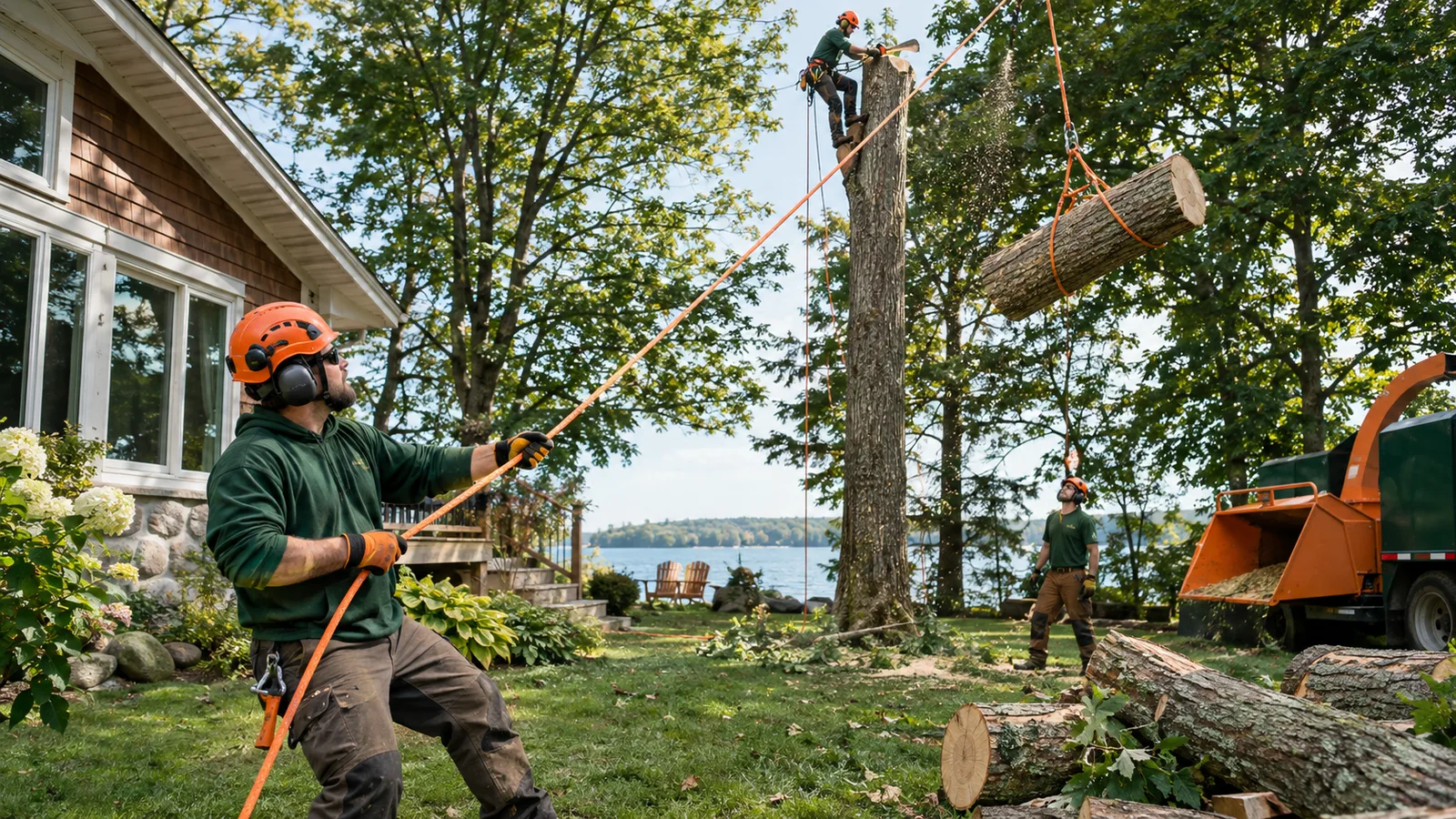
An arborist dismantling a tree in sections while a ground worker controls a lowering rope near a cottage and outbuilding
Sectional removal keeps cut material under control where the available drop zone is limited.

Tree size matters, but access often has just as much influence on the work. A tree in an open field may allow direct equipment access and whole-tree felling. A similar tree behind a cottage, between buildings, or beside a septic area can require climbing, sectional dismantling, and repeated lowering of small pieces.

Rigging is used when branches or trunk rounds cannot be allowed to fall freely. A rope system can include a suitable anchor point, lowering line, blocks, slings, and a friction device operated from the ground. The system must be matched to the expected load and the condition of the tree. Dead or decayed wood may not provide a dependable anchor, so an alternative method may be needed.

Ground conditions matter as well. Spring thaw, heavy rain, and freeze-thaw cycles can soften access routes in this part of Ontario. Heavy equipment may need to wait for firmer conditions or use a different route to reduce rutting. These constraints should be discussed before scheduling, especially on waterfront and rural properties with long or narrow approaches.

Book Your Free Inspection
Pricing Factors

How Much Does Tree Removal Cost in Tiny Township?

Tree removal in Tiny Township typically ranges from about $500 to $2,500 for many straightforward jobs, while very large, hazardous, or tightly confined trees may cost $3,000 or more. Smaller trees with open access may fall below that range.

Final pricing depends on height, trunk diameter, condition, species, nearby targets, equipment access, rigging needs, debris volume, and whether wood hauling or stump work is included. Emergency conditions and utility coordination can also affect the scope. The exact cost is confirmed after the tree and property are assessed.

Book Your Free Inspection

A clear assessment can identify the safest removal method, access needs, and debris plan before equipment arrives on your property.

Book Your Free Inspection
Homeowner Questions

Tiny Township Tree Removal Questions

Practical answers about permissions, hazardous trees, winter work, pricing, stump handling, and property preparation.

Do I need permission to remove a tree in Tiny Township?+

Permission may be required depending on the property's location, tree protection rules, shoreline or environmental constraints, and the scale of clearing. The property owner should confirm current requirements with the Township of Tiny and any other authority that has jurisdiction before work begins. Boundary trees also require care because ownership and consent can differ from a tree located wholly on one property.

How soon can a hazardous tree be removed?+

Scheduling depends on the urgency, crew availability, site access, weather, and whether utilities or public authorities must be involved. A tree that has uprooted, split, or dropped limbs near an occupied area should be assessed promptly. Until then, keep people away and do not park beneath it.

Can you remove a tree close to a cottage or house?+

Yes, trees close to buildings can often be removed by dismantling the crown and trunk in controlled sections. The exact method depends on sound rigging points, room for workers, roof clearance, access for equipment, and the condition of the wood. If free-falling material could damage the structure, ropes and lowering equipment may be used.

Can tree removal be done during an Ontario winter?+

Yes, tree removal can often be completed in winter when wind, visibility, access, and tree condition allow safe work. Frozen ground may support equipment better than soft spring soil, but ice, deep snow, extreme cold, and storm conditions can affect scheduling. Seasonal properties also need a clear access plan if driveways are not maintained.

What affects the price of tree removal in Tiny, Ontario?+

The main cost drivers are tree size, structural condition, proximity to buildings or wires, equipment access, rigging requirements, and the amount of material to be hauled. A smaller hazardous tree over a roof can require more controlled work than a larger tree in an open field. A property assessment is needed for a reliable written scope.

Will the stump be removed at the same time?+

Stump handling should be confirmed as a separate scope item because cutting down a tree does not automatically remove the stump and roots. Access, stump diameter, nearby utilities, stones, grade, and the intended use of the area affect the available options. State your plans for the space during the assessment so the work can be quoted clearly.

What should I do before the crew arrives?+

Move vehicles, trailers, furniture, toys, and portable decorations away from the planned work area. Keep pets and children indoors, unlock any required gates, and identify septic components, private wires, irrigation parts, or other concealed property features. For a seasonal home, confirm that the driveway can support the planned equipment.

Plan Your Tree Removal With Confidence

Describe the tree, its condition, and what surrounds it. Tiny Tree Service can assess the property and prepare a clear scope for safe, practical removal.